 EXPLORASELF
Resources · People
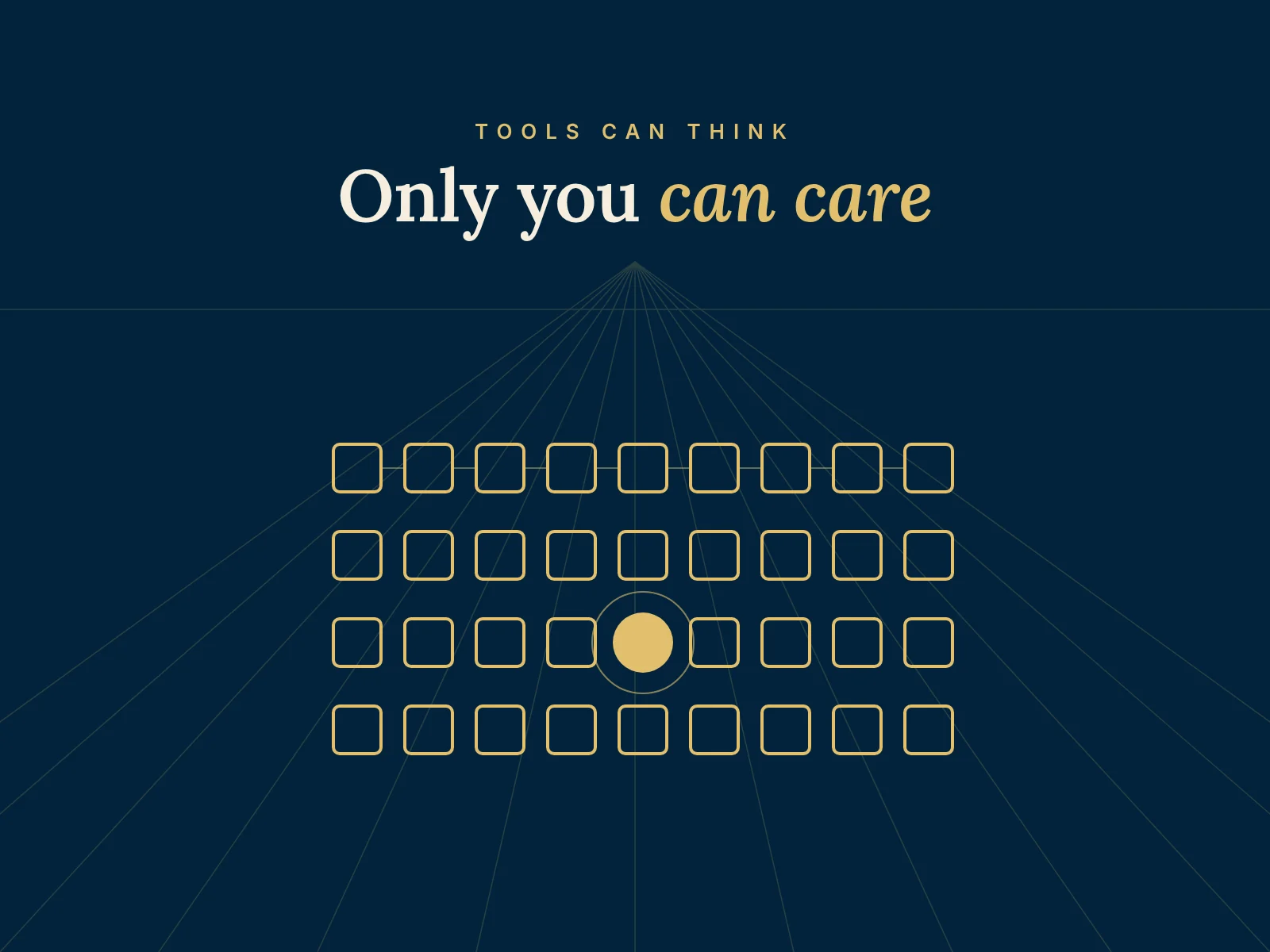
Tools can think. Only you can care: how to stay valuable in the age of AI
Grow the human skills no machine can replace.
The day the machine won
In May 1997, the world chess champion Garry Kasparov lost a six-game match to IBM’s computer Deep Blue. For many people it was a symbolic moment: a machine had beaten the best human in a game long seen as a test of intelligence.
What Kasparov did next is less famous and more interesting. Instead of declaring humans finished, he became curious about what happens when people and machines work together. In the “advanced” or “centaur” chess that followed, the strongest results did not always come from the strongest computers or the strongest grandmasters, but from people who were especially good at working with their machines: knowing when to trust the computer, when to question it, and what to ask it.
Machines can calculate. Humans choose what is worth calculating, and why.
The advantage has moved
When knowledge was scarce, the person who knew the most had an advantage. Now a machine can produce a business plan in seconds and answer almost any factual question instantly. Knowledge is everywhere, so the advantage now belongs to the people who can do what machines cannot do for us:
- Choose what matters, when everything is possible.
- Care about the right things, when attention is endlessly pulled away.
- Connect with other people in ways that build real trust.
- Act with courage when the outcome is uncertain.
A machine can tell you what the average business charges. It cannot tell you what you are afraid to ask for, or why. It can list a hundred possible priorities. It cannot tell you what your life is for.
Quick check · 30 seconds
Where are you stuck right now?
When a conversation gets difficult, you usually…
The people around you would say you are…
What would change your next 90 days the most?
Confidence that a new tool cannot take away
Many leaders feel a quiet anxiety about AI. Will it replace me? Will my skills still matter? Notice that these are mostly questions about tasks. The deeper question is about who you are.
Real confidence does not come from being the best at a task. Tasks change. It comes from knowing what you stand for, what you care about and how you choose to act, and from a record of keeping your promises to yourself and others. That kind of confidence becomes more valuable as the tools improve, because people will increasingly look for leaders they can trust.
Purpose is the compass
When the world moves fast, a map is not enough. Maps go out of date. Your purpose, the honest answer to “what is all of this for?”, is the compass. With it, new technology becomes a tool rather than a threat: how can this help me serve my customers better, give me back time for the people I love, free me for the human work only I can do?
Without purpose, technology simply speeds you up in whatever direction you were already going, even if it is the wrong one. Speed without direction is a faster way to get lost.
Your next step
Before you add another tool this month, answer one question in writing: what do I want my business to give my life? Then look at your week and ask whether it is moving you towards that answer, or only moving you faster.