 EXPLORASELF
Resources · People
Anger is expensive: how to understand it and solve it for good
A five-step reset that protects your team, your deals and your peace.
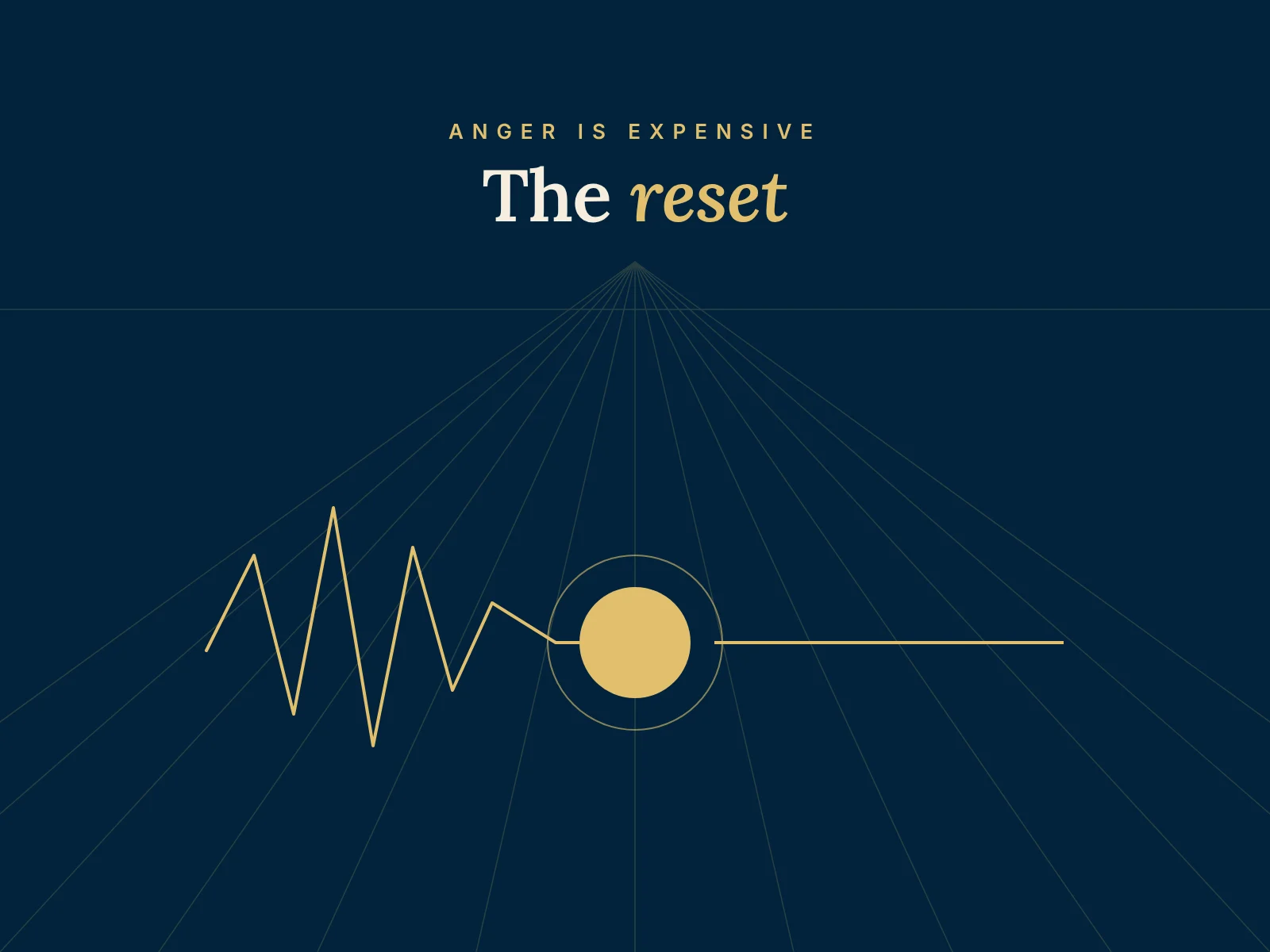
You see smoke coming from under the bonnet of your car. You don't get angry at the smoke. You pull over, switch off the engine and look for the cause. Anger is the smoke. It is a signal that something underneath needs attention. It is never the root, and never the whole story.
Most of us were taught one of two things: anger is bad, push it down; or anger is honest, let it out. Pushed down, it leaks out sideways as sarcasm and coldness. Let out, it damages the very people and results we care about. There is a third way: treat anger as information, then lead it.
1. What anger costs your business
Leaders tend to think their temper is a private flaw. The research says it is one of the most expensive habits a business can have. In 2013 Christine Porath and Christine Pearson published years of survey data in the Harvard Business Review on people treated rudely at work.
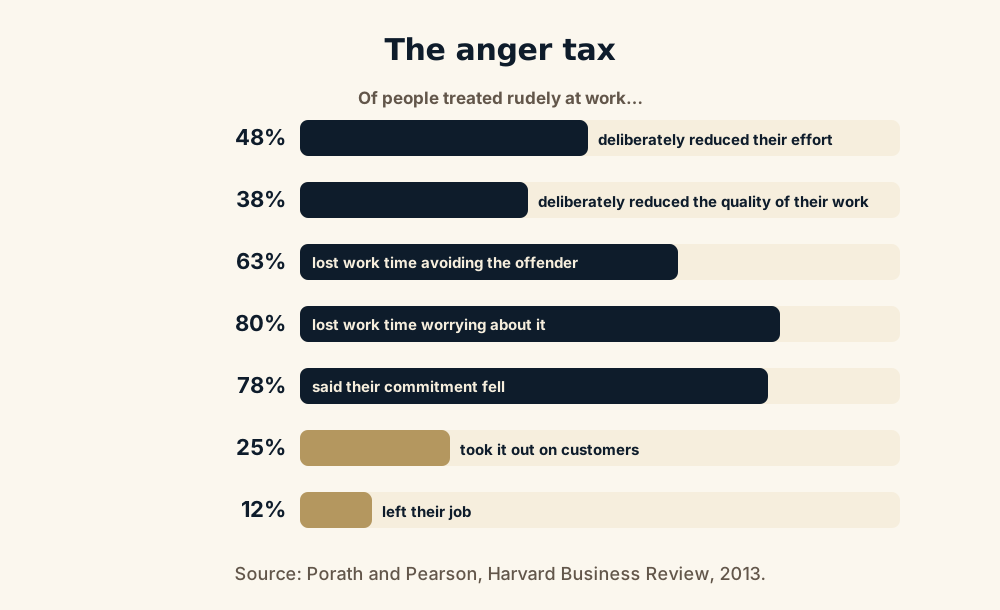
Note the word deliberately. People don't only feel worse, they quietly give you less. Cisco used figures like these to estimate that rude behaviour cost it around 12 million dollars a year. And anger costs decisions too: the psychologists Jennifer Lerner and Dacher Keltner found that angry people judge risks as smaller and make riskier choices. Anger makes you feel certain, which is exactly when you should not sign, hire, fire or send.
The most dangerous cost is the truth. When Alan Mulally took over Ford in 2006, the company was heading for a 12.7-billion-dollar loss, yet every project in his weekly review was marked green. When Mark Fields finally showed a red, people expected him to be fired. Mulally clapped. The next week the charts were honest, and the real work began. Google's Project Aristotle found the same thing: the top factor in great teams is psychological safety. You can't have that around a leader people are afraid of.
Write it
Estimate your own anger tax
… outbursts a month × … hours × … × 12 months. That's my yearly anger tax, before counting the people who leave and the decisions I reverse.
2. The formula under every feeling
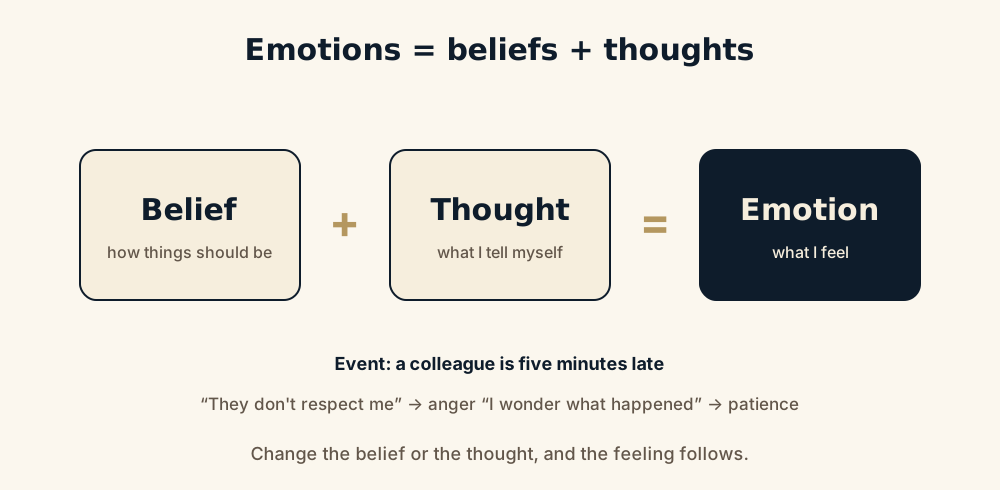
Emotions = beliefs + thoughts. Something happens. You have a thought about it, and it runs into a belief about how things should be. Belief: people who are late don't respect me. Thought: “Five minutes. Typical.” Emotion: anger. Change the belief to “people are sometimes late for reasons I don't know”, and the same five minutes produce patience instead.
Quick check · 30 seconds
Where are you stuck right now?
When a conversation gets difficult, you usually…
The people around you would say you are…
What would change your next 90 days the most?
3. The A.N.G.E.R. reset
The framework has five steps, one for each letter. The first is for the moment itself. The other four are done afterwards, when you are calm. You can't reason with someone who is drunk, and you can't fix anger in the middle of it.
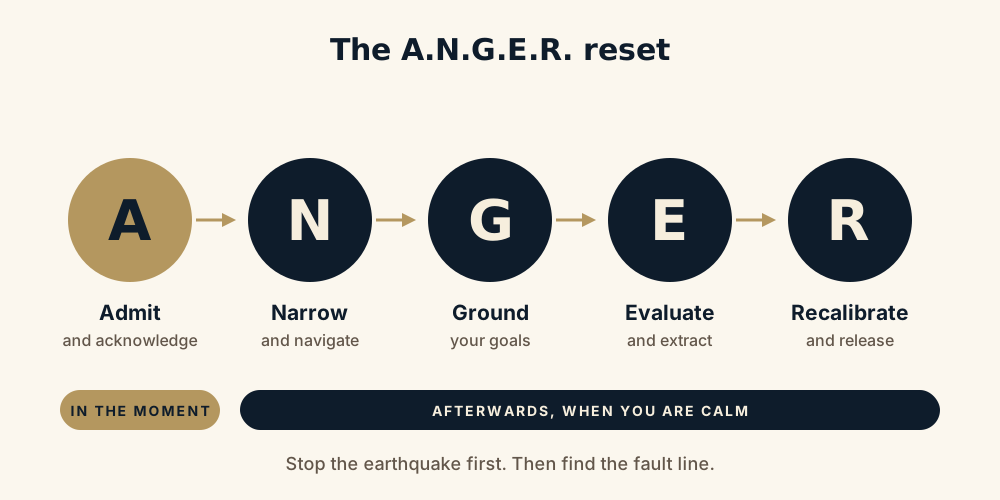
- A — Admit and acknowledge. Say “I'm angry.” Picture the best outcome. Ask: will my reaction get me closer to it? Then split it into event, process and outcome.
- N — Narrow and navigate. Find what sits under the anger: almost always fear, shame or hurt.
- G — Ground your goals. Check the belief behind it. Is it evidence or habit? Write a better one.
- E — Evaluate and extract. Log your triggers for two weeks. Keep the message, drop the explosion.
- R — Recalibrate and release. Practise until the new response is automatic. Patience is part of the method.
Practise it
Practise step A now: a 30-second reset
- Think of the last time you lost your temper.
- Say it plainly in your head: “I was angry.”
- What outcome did you actually want?
- Did your reaction bring you closer to it? Yes or no.
4. What sits under the anger
I hate being late. For years, running late because of traffic made my jaw lock and my head burn. I told myself it was about respect. When I looked deeper, I found something else: I believed that if I was late, I did not deserve respect. My father had taught me always to be on time, a good lesson taken too far. Under the anger was shame. Once I saw it, the anger lost most of its power. The traffic didn't change. My interpretation did.
Try it
What's under it? Match each trigger to its likely root
A client delays payment again and you snap at your accountant.
A team member points out your mistake in a meeting and you go cold.
A former partner's name comes up and your tone changes instantly.
Free ebook
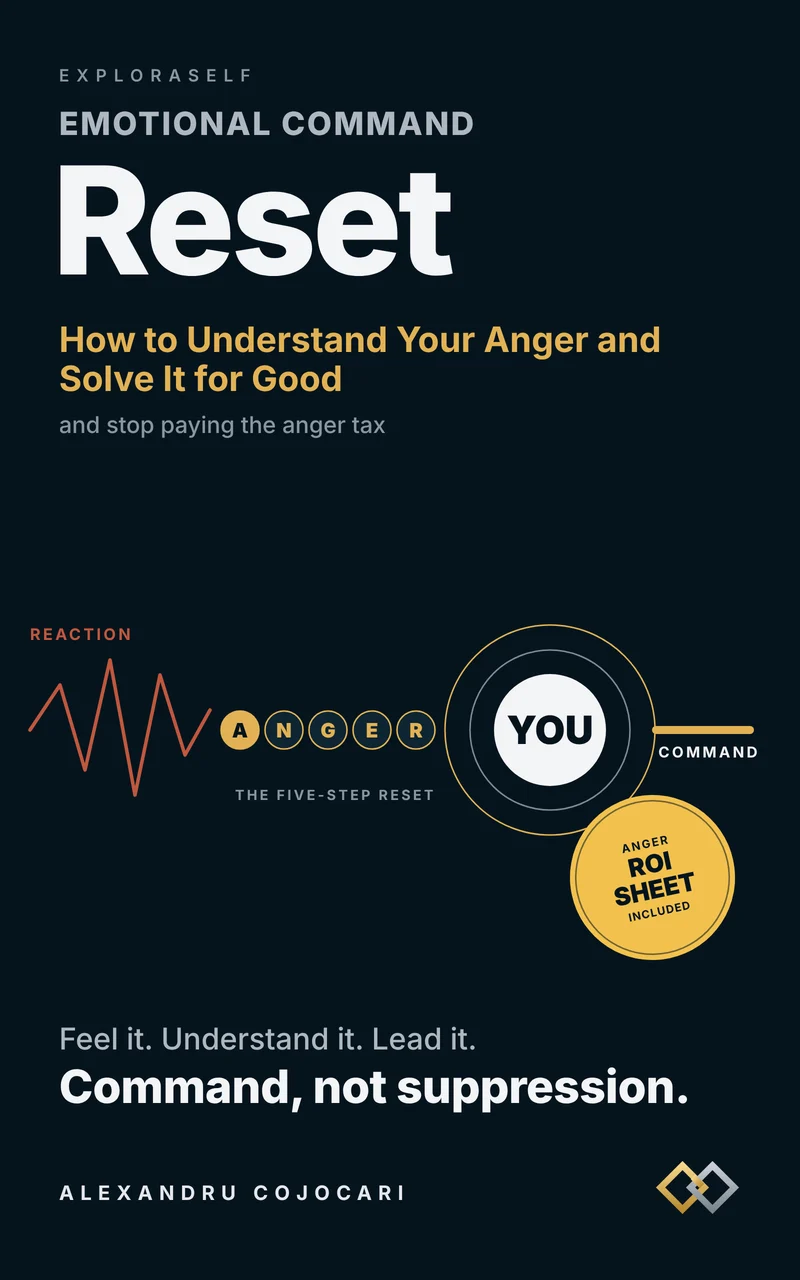
Emotional Command Reset: How to Understand Your Anger and Solve It for Good
5. Command, not suppression
Scripture puts it simply: be quick to listen, slow to speak and slow to become angry. Not never angry. Slow. Emotional command doesn't mean feeling nothing. Some of the strongest leaders feel deeply. The difference is that they decide what to do with it. Your team gives you the truth only as fast as you can handle it. Every time you choose command over reaction, you make it a little easier for them to tell you what you need to know. That is the real return.